Featured
Unknown Facts About Recession Impacting Rising Demand Are...
APFSC Philosophy to Achieve Debt Freedom Things To Know B...
The Facts About Post-Bankruptcy Help Such as Group Resour...

See This Report about Medical Debt Financial counseling f...
The Genuine Expense of Neglecting Debt: Just How Expert Counseling Providers Are Changing Financial Recovery
Table of Contents
Economic stress and anxiety has actually come to be a specifying attribute of modern-day American life. With total bank card debt exceeding $1.21 trillion and the average cardholder owing greater than $6,500, countless people find themselves caught in cycles of minimal payments and worsening interest. When credit report card rates of interest hover around 23%, even modest equilibriums can swell into frustrating concerns within months.
For those drowning in debt, the inquiry isn't whether to seek help-- it's finding the ideal sort of help that will not make matters worse.
The Growing Need for Financial Obligation Forgiveness Solutions
Financial obligation mercy has emerged as one of the most looked economic subjects online, and permanently factor. The idea of settling financial debts for much less than the sum total owed offers authentic want to individuals that see no practical course to paying their equilibriums in complete.
The procedure normally functions like this: when bank card accounts go unpaid for 120 days or more, lenders frequently charge off the financial debt. At this stage, they may accept lowered settlements to recover at the very least a section of what's owed. Successful arrangements can lower balances by 30% to 50%, depending upon the financial institution and your shown monetary challenge.
However, financial debt mercy isn't complimentary money. Cleared up accounts show up on credit report records as "" paid much less than full equilibrium,"" which affects your score. Furthermore, forgiven quantities exceeding $600 might be reported to the IRS as taxed earnings. Understanding these trade-offs prior to going after settlement is crucial.
Insolvency Counseling: The Misunderstood Safeguard
Bankruptcy lugs substantial stigma, yet it continues to be a legit legal tool designed to provide overloaded individuals an authentic new beginning. What several individuals don't understand is that federal legislation calls for 2 counseling sessions prior to and after filing-- and these sessions exist particularly to guarantee you're making an educated decision.
Pre-bankruptcy credit scores counseling includes a comprehensive evaluation of your income, financial debts, and costs. Qualified therapists existing options you might not have actually considered, including financial obligation management programs or hardship negotiations. This isn't concerning preventing insolvency; it has to do with confirming it's truly your best option.
Post-bankruptcy debtor education and learning prepares you for monetary success after discharge. You'll learn budgeting methods, conserving strategies, and credit history rebuilding comes close to made to stop future financial problems.
Organisations like APFSC offer both required programs, with fees around $19.99 per session unless you get approved for hardship waivers. Their accredited counselors provide same-day certificates, and sessions usually run 60 to 90 mins. This ease of access issues when you're already stressed concerning financial resources.
Comparing Your Debt Relief Options
Comprehending the landscape of debt alleviation aids you make educated choices. Each method lugs distinct advantages and drawbacks.
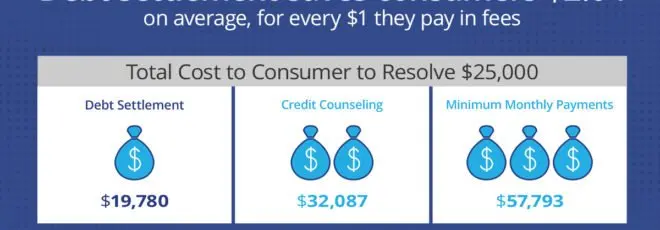
Debt Monitoring Programs consolidate numerous unprotected financial debts right into single regular monthly repayments. Therapists discuss with financial institutions to possibly decrease passion rates without calling for new lendings. The majority of clients complete these programs within three to five years. The key benefit is paying financial debts completely while reducing overall interest paid.
Financial obligation Settlement discusses lowered reward quantities, normally 30% to 50% less than owed. This technique calls for quiting repayments to creditors while collecting negotiation funds, which harms credit report throughout the procedure. Results vary based on financial institution readiness and your shown difficulty.
Personal bankruptcy offers court defense while getting rid of or restructuring financial obligations. Chapter 7 liquidates specific assets to release unprotected debts rapidly. Chapter 13 establishes three-to-five-year repayment prepare for those with routine revenue. Insolvency remains on credit history records for 7 to 10 years however offers one of the most comprehensive fresh begin.
Debt Therapy supplies education and learning and guidance without always signing up in official programs. Qualified therapists examine your total monetary image and recommend suitable next steps, which could consist of any one of the above alternatives.

What Establishes Nonprofit Therapy Apart
The distinction in between not-for-profit and for-profit debt relief firms matters enormously. Nonprofit companies like those licensed by the National Structure for Credit Therapy (NFCC) run under stringent ethical guidelines and charge regulations. Their counselors go through extensive qualification and needs to recertify every 2 years.
For-profit financial debt negotiation business, alternatively, may charge costs ranging from 15% to 25% of registered financial debt balances. Some utilize hostile sales tactics and make unrealistic pledges concerning outcomes. The Consumer Financial Protection Bureau has actually documented numerous issues about aggressive techniques in this field.
APFSC runs as a not-for-profit therapy firm, offering cost-free financial debt monitoring consultations and regulated fees for continuous services. Their HUD-approved real estate counselors add worth for those facing repossession alongside basic debt problems. Services are offered in English, Spanish, and Portuguese, increasing ease of access to underserved communities.
Study supports the performance of nonprofit counseling. A study commissioned by the NFCC discovered that credit report counseling customers lowered rotating financial obligation by $3,600 greater than comparison teams throughout the 18 months following their sessions. Virtually 70% of participants reported better finance and higher monetary confidence.
Warning Indications of Predacious Debt Relief Solutions
Not all financial debt alleviation firms have your finest rate of interests at heart. Identifying warnings shields you from making a difficult situation even worse.
Beware of companies that ensure specific outcomes. No legitimate service can guarantee exact settlement percentages or timeline guarantees due to the fact that end results depend upon individual lenders and circumstances.
Prevent any company requiring huge upfront charges before offering solutions. Legitimate not-for-profit therapy supplies free preliminary assessments, and for-profit negotiation companies are legally forbidden from gathering costs till they successfully resolve at the very least one financial obligation.
Inquiry anyone recommending you to stop connecting with lenders totally without explaining the consequences. While calculated interaction pauses occasionally support negotiations, full avoidance can result in legal actions, wage garnishment, and extra damage.
Legit agencies discuss all options honestly, consisting of options that could not involve their paid solutions. If a business presses only one solution regardless of your circumstance, look for assistance somewhere else.
Taking the Primary Step Toward Healing
Financial recuperation begins with sincere analysis. Collect your newest declarations for all financial obligations, determine your complete obligations, and assess your practical month-to-month repayment ability. This information creates the structure for any effective counseling session.
Consider scheduling cost-free appointments with several not-for-profit companies before committing to any kind of program. Compare their referrals, cost structures, and interaction styles. The appropriate therapy connection need to really feel encouraging instead of pressuring.
Organisations like APFSC provide on the internet conversation, phone appointments, and comprehensive intake procedures created to recognize your special scenario before suggesting options. Their debt monitoring calculator aids you think of possible timelines and savings before enrolling.
The Path Onward
Overwhelming financial obligation doesn't specify your future-- however ignoring it will. Whether debt mercy, personal bankruptcy counseling, or organized debt management makes sense for your situation relies on factors one-of-a-kind to your situations.
Expert assistance from accredited not-for-profit therapists lights up choices you might never ever uncover independently. These services exist especially to help individuals like you browse intricate monetary obstacles without aggressive fees or unrealistic pledges.
The ordinary American dealing with debt waits far also lengthy before seeking help, enabling rate of interest to compound and choices to narrow. Each month of delay expenses cash and prolongs your recovery timeline.
How to Protect Yourself From Financial Scams When in DebtYour very first conversation with a qualified counselor prices absolutely nothing however could transform every little thing. Financial freedom isn't booked for the lucky-- it's offered to any individual willing to take that initial action towards comprehending their choices and committing to a realistic strategy.

Table of Contents
Latest Posts

Unknown Facts About Recession Impacting Rising Demand Are Seeking Financial Trauma Recovery: Counseling Techniques for Clients with Repeated Financial Crises
APFSC Philosophy to Achieve Debt Freedom Things To Know Before You Get This
The Facts About Post-Bankruptcy Help Such as Group Resources Revealed
More
Latest Posts
APFSC Philosophy to Achieve Debt Freedom Things To Know Before You Get This
The Facts About Post-Bankruptcy Help Such as Group Resources Revealed